LED light therapy has gone from something you might spot in a dermatologist's clinic to something that regularly pops up on skincare feeds.
But once you get past the colourful lights, there's an important question: which colour actually makes sense for your skin?
Red and blue light are used for different concerns, although there can be some overlap. Choosing between them isn't really about which one is more popular. It's about understanding what you're trying to address.
So, let's break it down.
What Is LED Light Therapy?
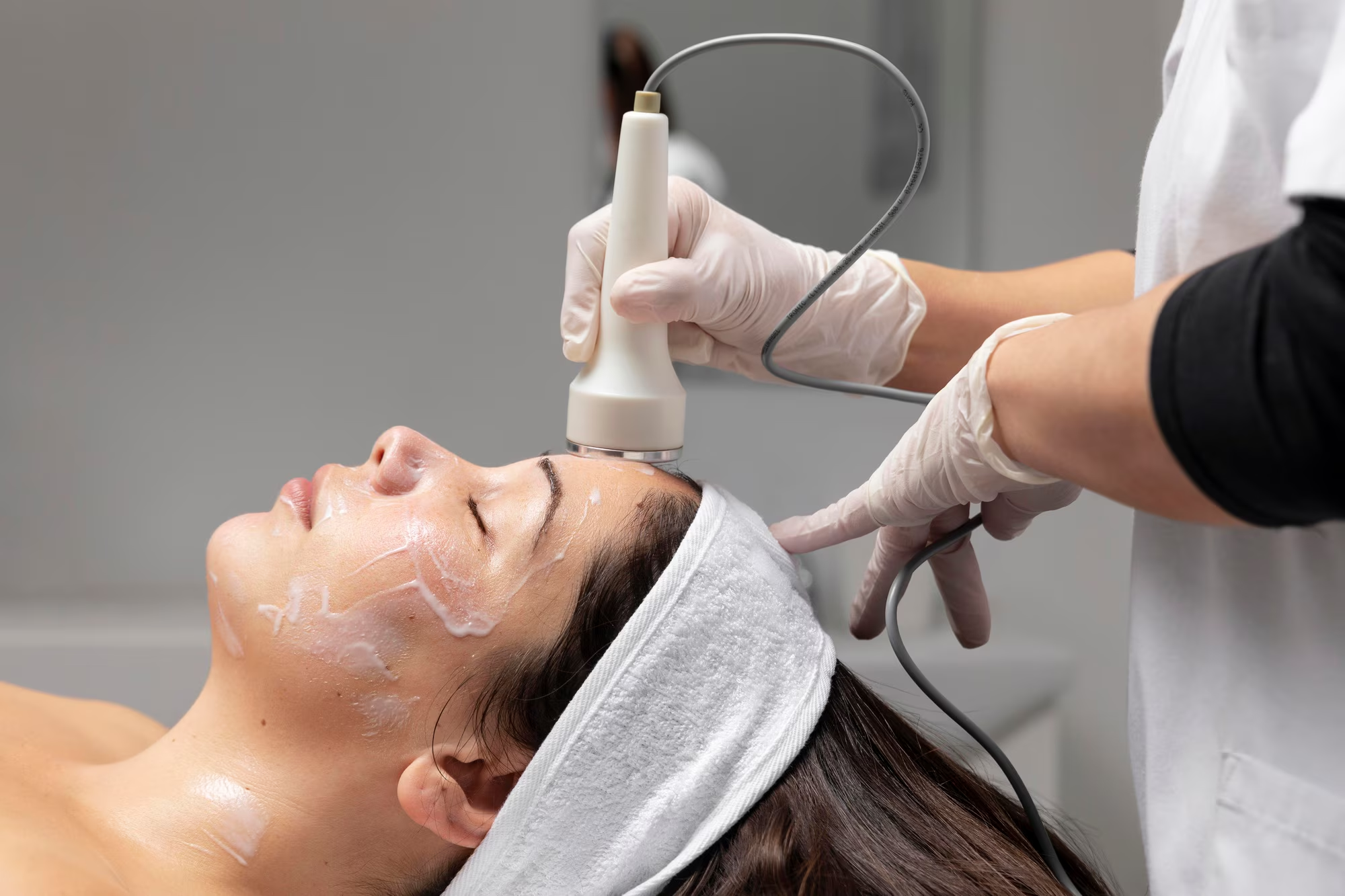
LED, or light-emitting diode, therapy uses specific wavelengths of light to target different skin concerns.
Different wavelengths penetrate the skin at different depths. Blue light primarily works closer to the surface, while red light penetrates further.
Unlike UV light, LED therapy does not use ultraviolet radiation. However, results can vary depending on the device, wavelength, treatment schedule and the concern being treated.
And while at-home LED masks are widely available, professional devices can be more powerful.
Red Light vs Blue Light: What's the Difference?
|
Comparision
|
Red Light
|
Blue Light
|
|
Primarily associated with
|
Inflammation, signs of ageing
|
Acne and breakouts
|
|
Penetration
|
Deeper than blue light
|
More superficial
|
|
Common skin concerns
|
Fine lines, redness, texture
|
Mild to moderate acne
|
|
How it works
|
May support cellular activity and collagen production
|
Can target acne-causing bacteria
|
|
Often used for
|
Skin rejuvenation and inflammation
|
Acne-focused care
|
Neither is simply a "better" version of the other. They are designed around different skin concerns.
What Is Red Light Therapy Used For?
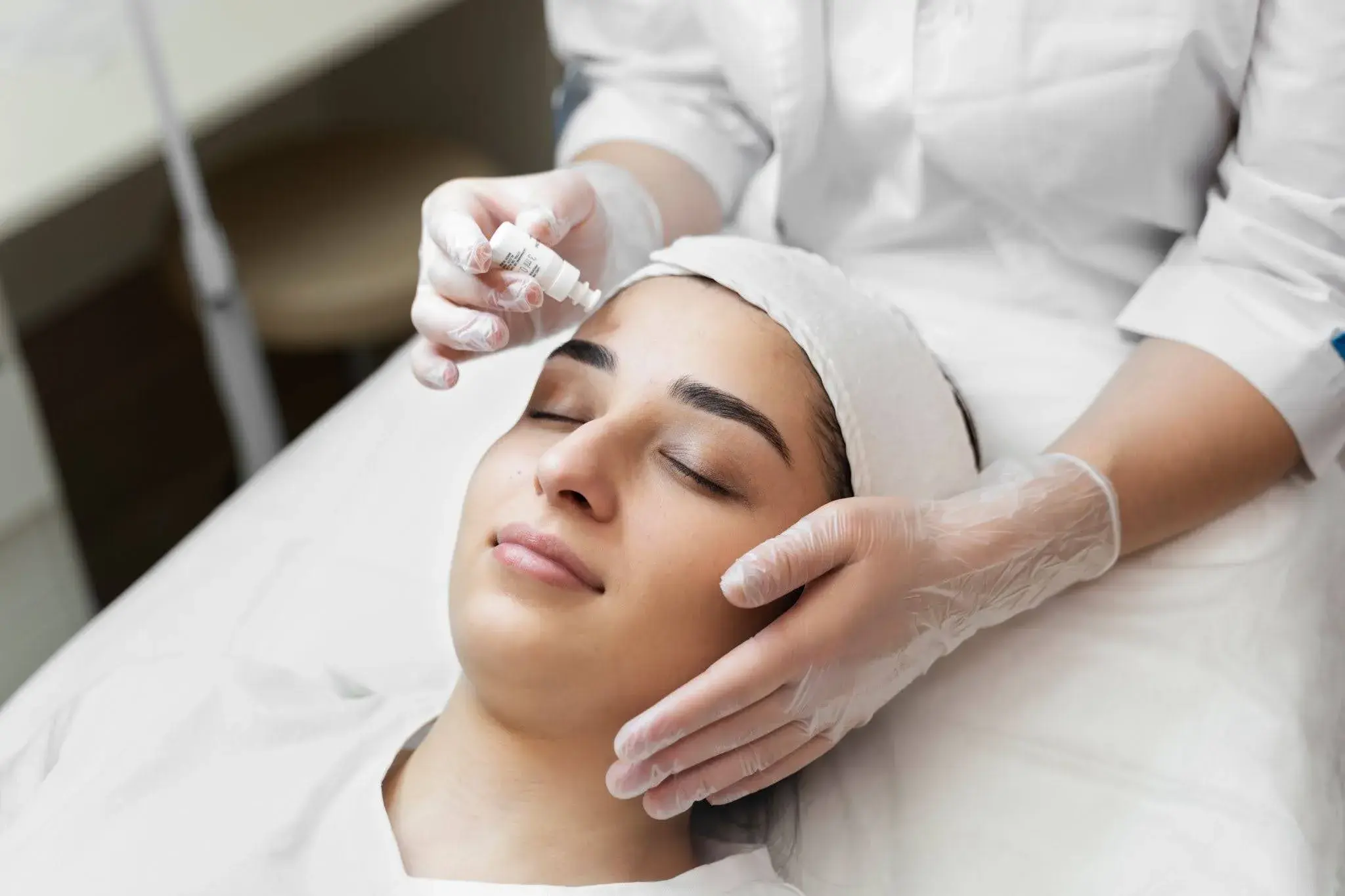
Red light therapy, also known as photobiomodulation, is commonly explored for concerns such as fine lines, wrinkles, redness, rough texture and some forms of acne. Research suggests it may support collagen production and help reduce inflammation, although more research is still needed to understand its full effectiveness.
This makes red light particularly interesting if your primary concern is skin quality rather than active breakouts.
Think:
- Fine lines
- Redness
- Rough or uneven-looking texture
- Signs of ageing
- Inflammation
- Certain types of acne
But expectations matter. Red light isn't an overnight skin reset, and dermatologists often use it as a complementary treatment alongside other approaches rather than as a standalone solution.
What Is Blue Light Therapy Used For?
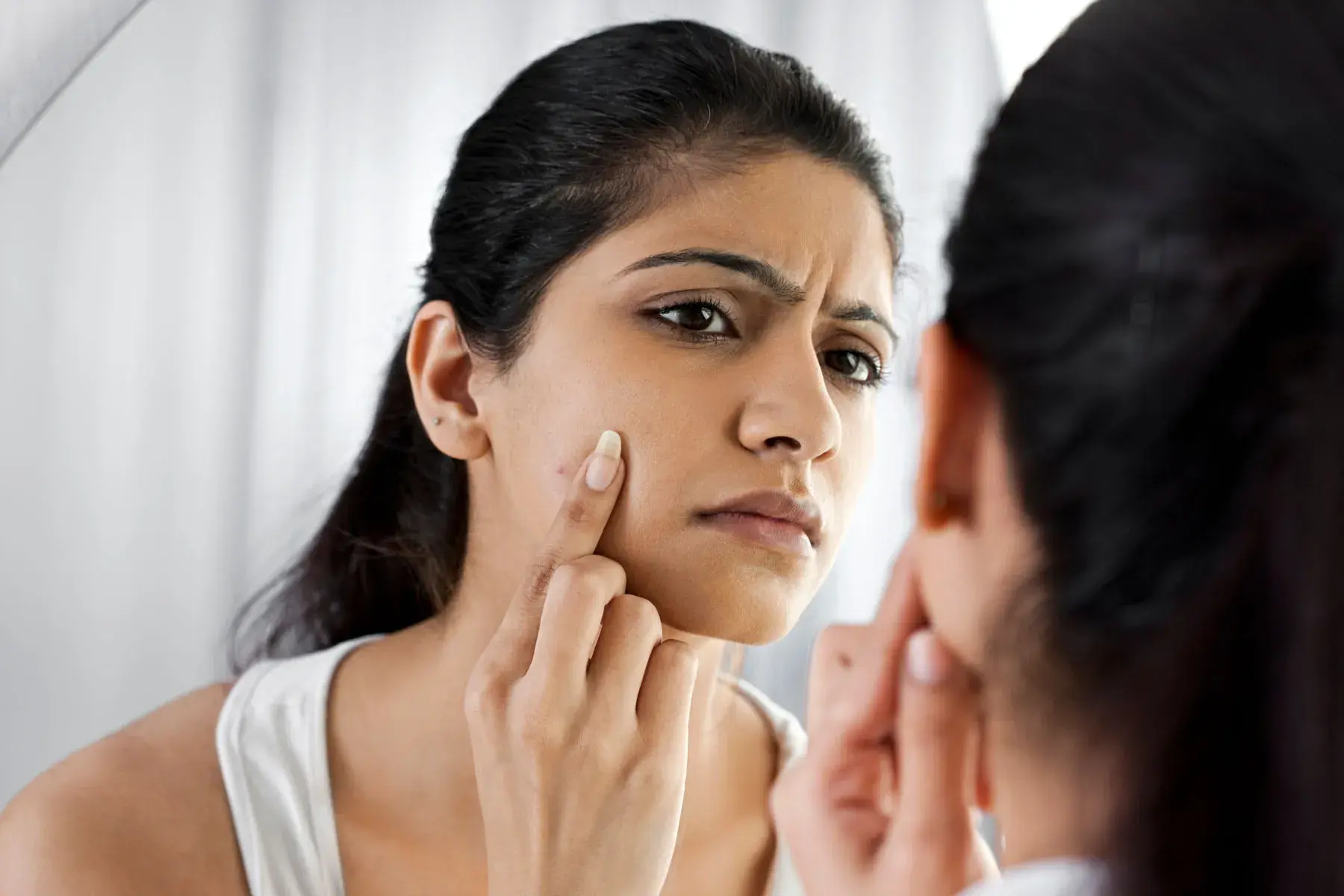
Blue light has a more acne-focused role.
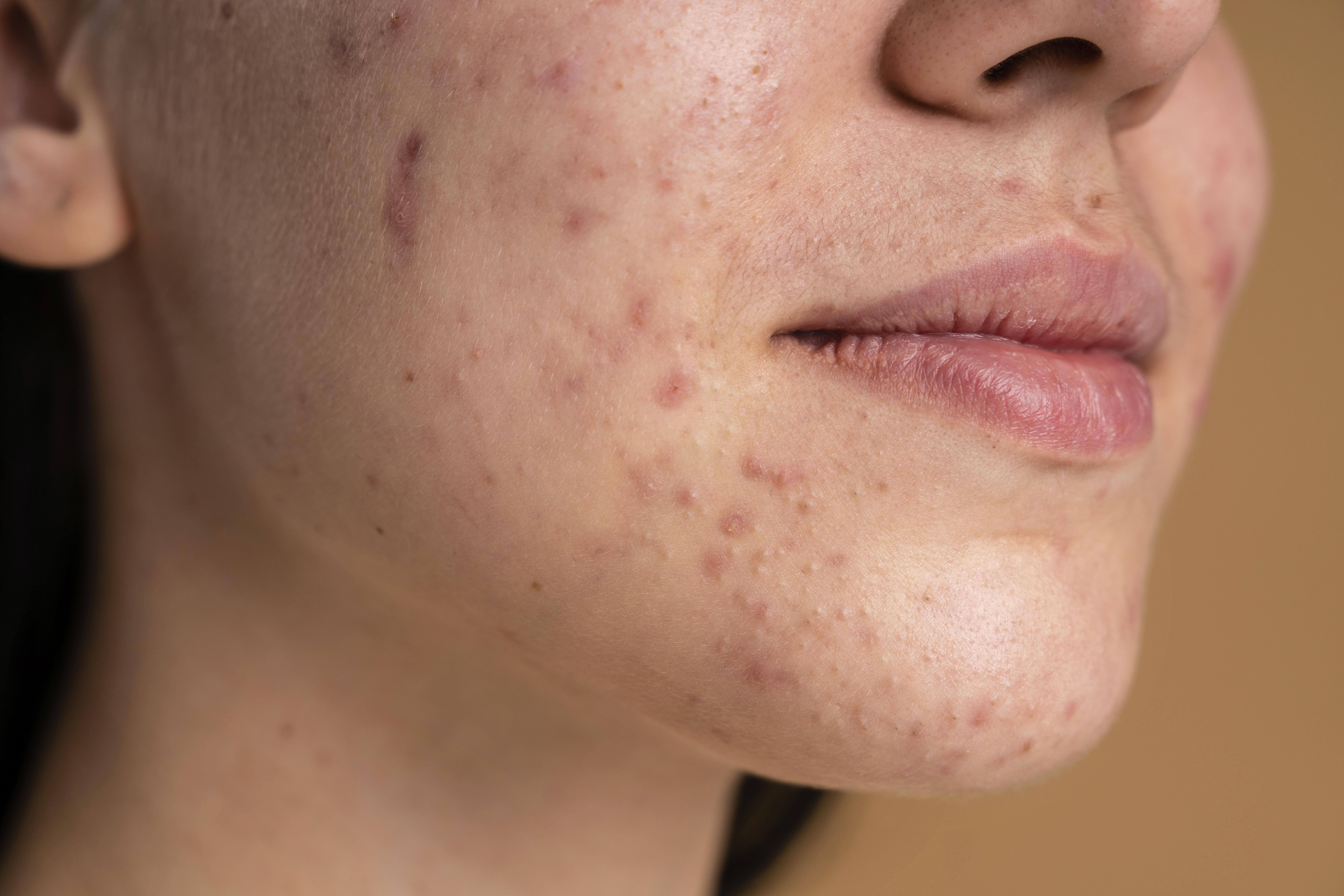
Certain wavelengths of blue light can target Cutibacterium acnes, the bacteria associated with acne, which is why blue light therapy is commonly used for some types of pimples and mild to moderate acne.
It may be considered when you're dealing with:
- Active pimples
- Acne-prone skin
- Mild to moderate inflammatory acne
- Recurring breakouts
However, blue light isn't a universal acne treatment. The American Academy of Dermatology notes that visible blue, red and combined blue-red light devices can treat pimples, but aren't effective for blackheads, whiteheads, acne cysts or nodules.
So if your skin concern is more complicated than occasional breakouts, a dermatologist can help determine whether light therapy belongs in your treatment plan.
Can You Use Red and Blue Light Together?
Sometimes, yes.
Because red and blue light target different aspects of skin concerns, some LED treatments combine them. Blue light can address acne-causing bacteria, while red light may help with inflammation and skin recovery.
But that doesn't mean combining every available wavelength will automatically give you better results.
The right treatment depends on the concern being treated, your skin and the device being used.
This is especially important if you're considering professional light-based treatments rather than simply using an at-home mask.
Is LED Light Therapy Safe?
LED light therapy is generally considered low-risk, but "non-invasive" doesn't mean "right for everyone."
Red light therapy can occasionally cause mild irritation or discomfort, and people with photosensitive conditions or those taking medications that increase light sensitivity may need to avoid it.
With blue light, some people may experience temporary redness or dryness.
And if you're using an at-home device, follow the manufacturer's instructions carefully, including any recommended eye protection.
More importantly, don't use a light device simply because it is trending online. The AAD recommends speaking with a dermatologist before using an at-home red-light device, particularly to determine whether it's appropriate for your concern and whether medications or existing conditions could affect its use.
So, Which Light Does Your Skin Need?
A simple way to think about it:
Concerned about breakouts?
Blue light may be worth discussing with a dermatologist.
Concerned about fine lines, redness or overall skin quality?
Red light may be considered as part of a broader treatment plan.
Dealing with both?
A combination approach may be appropriate, depending on your skin and the treatment being used.
Not sure what's actually causing your skin concern?
That's where a professional skin assessment becomes more useful than choosing a colour based on Instagram.
At Bodycraft Clinic, skin concerns can be assessed before recommending an appropriate treatment approach, whether you're dealing with acne, pigmentation, texture, ageing or other skin concerns.
Explore Bodycraft Skin & Clinic Services
The Takeaway
Red and blue light aren't competing treatments.
Blue light is more closely associated with acne-focused care, while red light is commonly explored for inflammation, skin quality and signs of ageing.
And while LED therapy can be a useful part of a skincare plan, it isn't a replacement for understanding what's actually happening with your skin.
Because sometimes, the best treatment doesn't start with choosing a colour.
It starts with choosing the right approach.
FAQs
Is red or blue light better for acne?
Blue light is more specifically associated with acne because it can target acne-causing bacteria. Red light may also be used as part of acne care, particularly for inflammation.
Can red light reduce wrinkles?
Some research suggests red-light therapy may improve the appearance of fine lines and wrinkles, but results vary and more research is needed to establish the most effective treatment parameters.
Can LED light therapy replace acne treatment?
Not necessarily. Light therapy may be useful as part of an acne treatment plan, but it doesn't address every type of acne. Dermatologists may recommend other treatments depending on the severity and type of acne.
Is at-home LED therapy the same as professional treatment?
No. At-home devices are generally less powerful than professional devices, and different devices have different wavelengths, settings and treatment schedules.
Explore More Articles:





.png)


-1.png)


-1.png)
-3.png)




.png)



-Aug-02-2026-05-23-10-1368-PM.png)


.webp)
-1.webp)
.webp)
-Jul-07-2026-12-19-56-1023-PM.webp)




-Jun-01-2026-02-54-50-5351-PM.png)
-Jun-01-2026-02-45-39-8016-PM.png)

-May-29-2026-03-30-08-6855-PM.png)


-1.webp)

-3.webp)





.webp)
.webp)
-1.webp)
.webp)
.webp)
.webp)