The low fade remains one of the most adaptable men’s hairstyles in 2026. It keeps the area around the ears and neckline neat without creating the dramatic contrast of a high fade, making it suitable for professional cuts, textured styles and longer hair.
What has changed in 2026 is the finish. Men’s haircut trends are moving towards softer transitions, natural movement and styles that work with the hair’s existing texture. While longer, less structured hair is also gaining attention, the low fade continues to work because it can be incorporated subtly instead of dominating the entire haircut.[1][2]
The best low fade haircuts for men combine that clean lower section with a top designed for the person’s hair density, growth pattern, face shape and styling routine.
What Is a Low Fade Haircut?
A low fade gradually shortens the sides and back, with the transition beginning close to the ears and lower neckline. More weight remains around the temples than it would with a mid or high fade.
This creates:
- A softer outline around the head
- A clean finish without exposing too much scalp
- Greater flexibility with longer hair on top
- A transition that works with formal and casual styles
- An easier starting point for someone trying a fade for the first time
A low fade is not one fixed haircut. It describes where the transition begins. The hair on top may be cropped, curled, swept back, parted or left significantly longer.
Did You Know?
A fade is not created with one clipper guard. It is a gradual transition between several lengths. The skill lies in removing visible lines while keeping the fade low enough to preserve the intended shape. |
Low Fade vs Low Taper Fade
The terms are often used interchangeably, but they can describe different finishes.
Low fade
A low fade usually creates a continuous transition around the sides and back. The lower section may become very short or even fade down to skin.
Choose it when you want:
- A visibly cleaner perimeter
- Greater contrast with the top
- A sharper, more defined finish
- Shorter hair around the lower sides
Low taper fade
A low taper fade haircut concentrates the shortest transition around the sideburns and neckline. More length is retained through the sides, giving the haircut a softer and more natural appearance.
Choose it when you want:
- A subtle office-friendly cut
- More fullness around the sides
- Easier grow-out
- A less exposed scalp
- A finish that complements longer or textured hair
The low taper is particularly relevant to men’s hairstyles in 2026 because it supports the current preference for movement and natural texture without sacrificing a neat outline.[1]
10 Best Low Fade Haircuts for Men in 2026
1. Classic Low Fade Haircut
The classic low fade haircut keeps the transition neat and gradual while leaving a practical amount of length on top. It does not depend on an exaggerated fringe, hard part or high-volume finish.
It suits:
- Straight or slightly wavy hair
- Most professional settings
- Men trying a fade for the first time
- Anyone who wants styling flexibility
Ask your barber for a low fade that follows the natural shape around the ears, with enough length retained on top to style forward, sideways or naturally.
Styling effort: Low to moderate
Best finish: Styling cream or light matte paste
2. Low Taper Fade Haircut
The low taper fade is one of the most wearable haircut trends of 2026 . Only the sideburns and lower neckline are tapered closely, while the rest of the sides retain more weight.
This is a strong option for:
- Thick or dense hair
- Conservative workplaces
- Longer tops
- Men who dislike exposed scalp
- Anyone wanting a softer grow-out
It also works well when the hair has strong movement or a natural wave that would look disconnected against severely faded sides.
Styling effort: Low
Maintenance: More forgiving than a low skin fade
3. Textured Low Fade
A textured low fade combines a neat lower transition with choppy or layered movement on top. It is one of the easiest ways to make thick hair feel lighter without flattening it.
The top can be styled:
- Forward
- Slightly messy
- With a small lifted fringe
- In its natural direction of growth
A matte clay or paste helps separate the texture without creating a wet, rigid finish. Begin with a small amount, as too much product can make dense hair look heavy.
Best for: Straight, thick or slightly wavy hair
Face-shape effect: Adds shape without excessive height
4. Low Fade Crop Top
The low fade crop top keeps the upper section short, textured and directed forward. The fringe may be blunt, uneven or softly broken up depending on the desired effect.
It is particularly useful for men who want:
- A short low fade haircut
- Minimal morning styling
- Better control over thick hair
- A style that does not require a defined side part
- A fringe that can soften a high forehead
Men with longer face shapes may prefer the crop because the forward fringe avoids adding unnecessary height.
Styling effort: Low
Best product: Matte paste or texture powder
5. Low Fade Crew Cut
A low fade crew cut is short and structured, with slightly more length towards the front. It has the practicality of a military-inspired cut but looks softer when paired with a lower fade.
This cut works well for:
- Straight or mildly wavy hair
- Active lifestyles
- Hot and humid weather
- Men who want a neat workplace haircut
- Anyone who prefers minimal styling
Ask for a gradual low fade rather than taking the sides too high. Retaining a little weight near the temples helps distinguish it from a high-and-tight haircut.
Styling effort: Minimal
Face-shape effect: Creates a clean, balanced outline
6. Low Fade Buzz Cut
The low fade buzz cut keeps the top uniformly short while blending the sides down towards the ears and neckline.
Compared with a one-length buzz cut, the fade creates more shape and definition. It also provides a cleaner transition into facial hair.
Before choosing it, consider:
- Your scalp visibility
- Hairline shape
- Crown growth pattern
- Any scars or areas you prefer not to expose
A slightly longer guard on top can create a softer result than an extremely close buzz.
Styling effort: None
Maintenance: Requires regular clean-ups to retain sharpness
7. Low Fade Quiff
The low fade quiff keeps volume through the front while the lower sides remain tidy. The contrast can make the top look fuller without requiring an aggressive fade.
It suits:
- Straight or wavy hair
- Medium-density to thick hair
- Oval, round and square face shapes
- Men who are comfortable using a dryer and styling product
For a modern 2026 finish, keep the quiff touchable rather than heavily lacquered. Use a pre-styler for lift, dry the front into position and finish with a small amount of matte paste.
Styling effort: Moderate
Face-shape effect: Adds height and can lengthen a rounder face
8. Low Fade Pompadour
The low fade pompadour creates a more polished and deliberate silhouette than a casual quiff. The hair is lifted and directed back, with volume concentrated at the front.
It works best when the top has sufficient:
- Length
- Density
- Natural lift
- Styling hold
The 2026 version is less rigid than the traditional high-shine pompadour. A controlled shape with visible texture feels more current than a solid, helmet-like finish.
Styling effort: High
Best for: Medium to thick straight or wavy hair
9. Low Fade Comb Over
A low fade comb over uses a side part or natural separation to direct the hair across the top. It can appear classic, formal or modern depending on the amount of volume and texture.
For a contemporary result:
- Avoid an excessively wide shaved part.
- Keep the top softly textured.
- Preserve some weight near the temples.
- Use flexible rather than stiff hold.
This is among the most versatile modern low fade haircuts for men who move between formal and casual settings.
Styling effort: Moderate
Best product: Styling cream or low-shine pomade
10. Low Fade Slick Back
A low fade slick back retains medium or long hair on top and directs it away from the face. The fade prevents the sides from looking bulky while allowing the upper section to remain dramatic.
Choose between:
- A polished slick back with pomade
- A natural brushed-back finish with cream
- A loose, textured sweep for a more relaxed style
If the top is very dense, internal layering can reduce weight. Removing too much length from the sides, however, may make the style look disconnected when it is not slicked back.
Styling effort: Moderate to high
Best for: Straight, wavy or manageable thick hair
Best Low Fade Haircuts for Indian Men
There is no single Indian hair type. Indian men may have fine, coarse, straight, wavy or curly hair, along with very different densities and growth patterns.
The right choice should account for:
- Hair thickness
- Temple and hairline shape
- Crown or cowlick direction
- Scalp visibility
- Humidity and perspiration
- Workplace requirements
- Time available for daily styling
Dense, straight hair often works well with textured crops, crew cuts and short quiffs. Wavy hair can support a natural fringe or brushed-back low taper, while curly hair benefits from a fade shaped around its dry curl pattern.
For warm or humid cities, a shorter top may feel easier to manage. If you commute in a helmet, a crop, crew cut or low taper may recover its shape more easily than a high-volume pompadour.
What to Tell Your Stylist
Saying “give me a low fade” does not fully describe the haircut.
Discuss:
- How low the transition should begin
- Whether you want a taper, regular fade or skin fade
- How much weight to keep around the temples
- The desired length on top
- Whether the neckline should be natural, tapered or sharply outlined
- How the sideburn should connect with the beard
- Whether you use styling products
- How often you are willing to return for maintenance
Bring reference photographs showing the front, side and back. Choose images with hair texture reasonably similar to yours; a cut can behave very differently on fine straight hair and dense curls.
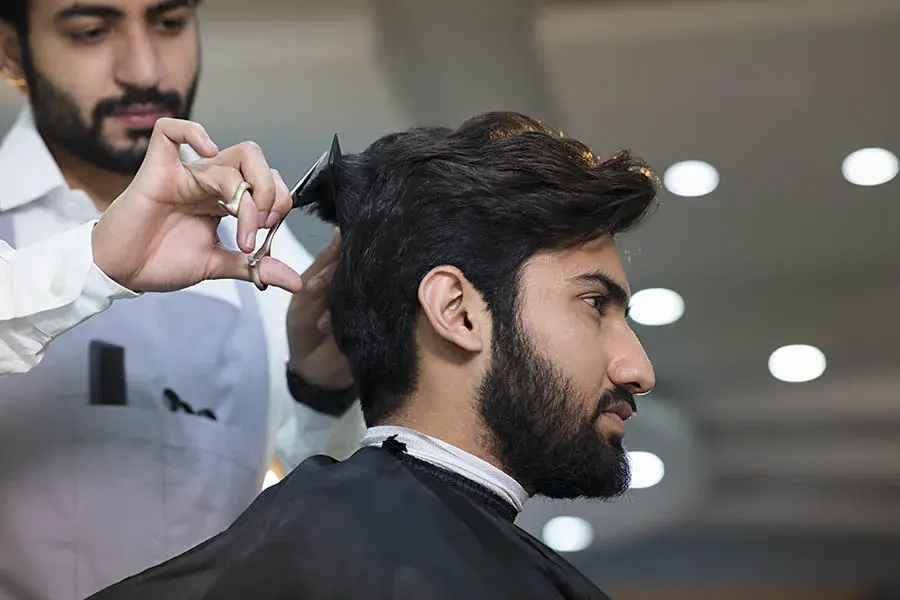
Bodycraft’s Men’s Cut and Style services include precision haircuts and barbering, allowing the fade, upper shape and facial-hair transition to be planned as one look rather than as separate elements.
How Often Should a Low Fade Be Refreshed?
The shorter the fade, the more quickly its contrast becomes less defined.
As a general guide:
- A low skin fade may need attention every two to three weeks.
- A regular low fade may remain presentable for around three to four weeks.
- A low taper usually grows out more softly and may allow a longer interval.
Hair-growth rate, neckline, workplace preference and desired sharpness will affect the timing. You may only need a perimeter clean-up rather than a full haircut at every visit.
Choose the Fade Around the Hair You Actually Have
The best low fade haircuts for men in 2026 are not defined by the shortest clipper setting. They are defined by proportion.
A good low fade should:
- Work with your natural texture
- Preserve the right amount of weight
- Complement your face and head shape
- Connect naturally with facial hair
- Suit your styling ability
- Grow out in a way you can maintain
Whether you choose a low taper, textured crop, crew cut, quiff, curly top or low skin fade with a beard, the cut should be customised rather than copied guard-for-guard from a photograph.
Consult a Bodycraft hair expert to find a low fade that suits your texture, face shape, lifestyle and preferred level of maintenance.
FAQs
Are low fades still in style in 2026?
Yes, although the overall trend is moving towards softer tapers, natural texture and longer tops. Low fades remain relevant because they can be adapted without making the haircut look excessively severe.[1][2]
What is the most low-maintenance low fade haircut?
A low fade crew cut, buzz cut or crop top requires the least daily styling. The fade itself will still need periodic maintenance.
Is a low fade suitable for curly hair?
Yes. The fade should be shaped around the curl pattern and connected carefully to the volume above it.
Which low fade is best for straight hair?
Textured crops, crew cuts, comb overs and short quiffs all work well. The choice depends on hair thickness and how much styling you want to do.
Does a low fade suit thin hair?
It can, but taking the sides down to skin may create strong contrast with a sparse top. A softer low taper and a textured upper section may provide better visual balance.
Is a low taper fade professional?
A low taper is among the most workplace-friendly fade options because it keeps more weight through the sides and grows out softly.
Can long hair be paired with a low fade?
Yes. A low fade or taper can clean the sideburn and neckline while preserving length on top. The transition should remain subtle enough to work when the hair is worn loose.
What product is best for a low fade haircut?
The product depends on the top:
- Matte paste for crops and short texture
- Cream for natural movement
- Mousse for waves and volume
- Curl cream for curls
- Pomade for slick backs and comb overs
Trend References
- GQ. “Everything You Need to Know About Fade Haircuts.” 31 July 2026. Available at: GQ
- GQ. “The Fade Haircut Is Dead.” 2026. Available at: GQ
- GQ. “The 7 Best Short Haircuts for Men in 2026.” Available at: GQ
Explore More Articles:






.png)



.png)
.png)


-1.png)

-1.png)
-3.png)


.png)
-Aug-02-2026-05-23-10-1368-PM.png)


.webp)
-1.webp)
.webp)
-Jul-07-2026-12-19-56-1023-PM.webp)


-Jun-01-2026-02-54-50-5351-PM.png)
-Jun-01-2026-02-45-39-8016-PM.png)
-May-29-2026-03-30-08-6855-PM.png)
-1.webp)
-3.webp)



.webp)
.webp)
-1.webp)
.webp)