If you have ever hesitated before booking a wax because someone warned you that the hair would return thicker, darker or faster, you are not alone. This is one of the most persistent myths about hair removal.
The short answer is no – waxing does not make hair grow back thicker. Waxing pulls the hair shaft out from the follicle, but it does not create new follicles or increase the natural diameter of the hair. Hair thickness and growth are influenced primarily by genetics, hormones, age, medications and certain health conditions.
Some people even notice that regularly waxed hair feels softer or appears finer over time. However, this varies, and waxing should not be described as a permanent hair-reduction treatment.
Here is what actually happens to your hair after waxing and which other common waxing beliefs deserve a closer look.
How Does Waxing Remove Hair?
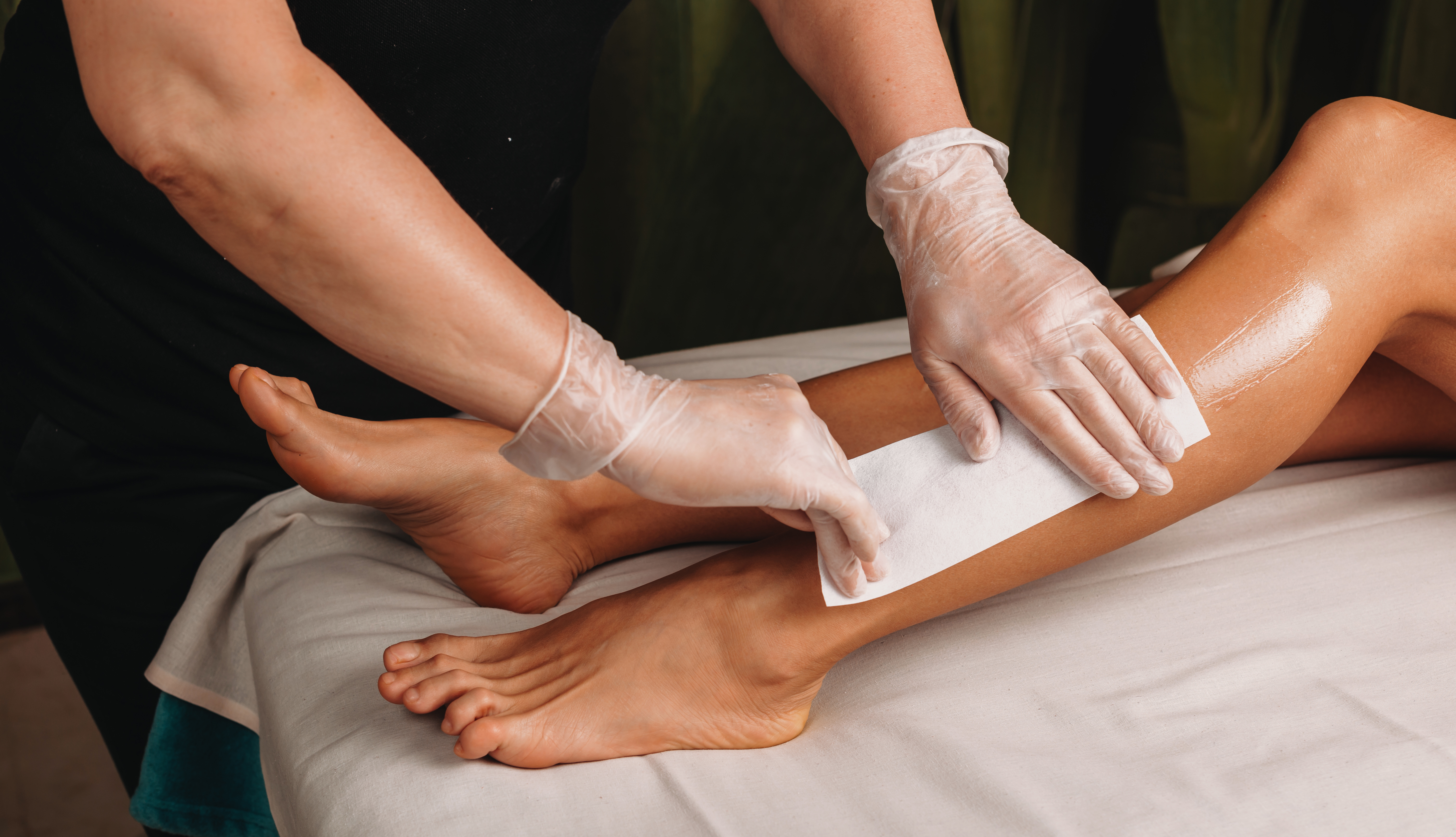
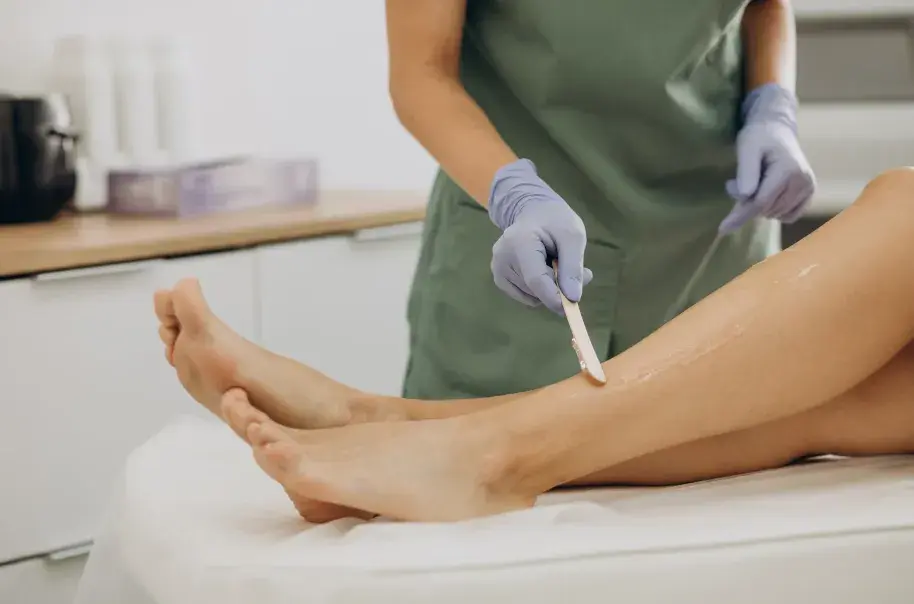
Each hair grows from a small structure within the skin called a hair follicle. During waxing, warm or cold wax adheres to the visible hair. When the wax is removed, it pulls the hair shaft out from within the follicle.
The follicle itself remains in the skin and can produce another hair. This is why waxing offers temporary smoothness rather than permanent removal.
Compared with shaving, waxing:
- Removes hair from beneath the skin’s surface
- Usually keeps the area smoother for longer
- Does not leave an immediately blunt, stubbly tip
- Requires enough regrowth for the wax to grip
- May cause short-term redness or sensitivity
Hair does not all grow at the same time. Different follicles may be in different stages of their growth cycles, which is why a few hairs can appear before the rest after a waxing session.
Myth 1: Waxing Makes Hair Grow Back Thicker
Verdict: False.
Waxing cannot increase the number of follicles in the skin. It also does not change the genetic or hormonal signals that largely determine the thickness, colour and distribution of body hair.
New growth may occasionally seem more noticeable because:
- You have become accustomed to smooth skin.
- The contrast makes early regrowth easier to spot.
- Some hairs were too short to be removed during the previous session.
- Hair in different growth stages is becoming visible at different times.
- Hormonal changes may be affecting hair independently of waxing.
For some people, repeated waxing may be followed by softer or finer-looking regrowth, possibly because repeated removal affects individual follicles. This is not guaranteed, and the response can differ between body areas and individuals.
Myth 2: Waxing Makes Hair Grow Back Faster
Verdict: False.
Waxing does not speed up the follicle’s natural growth cycle. Because the hair is removed from within the follicle rather than cut at the skin’s surface, it generally takes longer to become visible than shaved hair.
Results commonly last a few weeks, but the exact timeline depends on:
- The body area
- Individual growth patterns
- Hormonal influences
- How much hair was long enough to be removed
- The stage of growth of each follicle
- How regularly the area is waxed
If regrowth seems unusually rapid, it may mean that some hairs were broken rather than removed completely or that they were in different growth stages during the appointment.
Myth 3: Shaving Makes Hair Thicker, but Waxing Does Not
Verdict: Neither method makes hair biologically thicker.
Shaving cuts the hair at the surface and leaves a blunt tip. As the cut hair emerges, that tip can feel coarse or look more noticeable. This creates the impression that the strand has become thicker, even though its diameter and growth rate have not changed.
Waxing removes the entire strand from within the follicle. When a new hair becomes visible, it usually has a naturally tapered tip, which may make it feel softer than shaved regrowth.
|
Feature
|
Waxing
|
Shaving
|
|
Where hair is removed
|
From within the follicle
|
At the skin’s surface
|
|
Regrowth sensation
|
Often softer initially
|
May feel blunt or stubbly
|
|
Typical result duration
|
A few weeks
|
A few days
|
|
Common temporary effects
|
Redness, tenderness or irritation
|
Razor burn, cuts or irritation
|
|
Permanent reduction
|
No
|
No
|
Myth 4: Regular Waxing Permanently Stops Hair Growth
Verdict: Usually false.
Waxing is a temporary hair-removal method. Some people notice less dense or finer-looking regrowth after waxing consistently for a long period, but others see very little change.
It should not be confused with methods intended to damage follicles more directly, such as laser hair reduction or electrolysis.
If your aim is simply to enjoy smoother skin for several weeks, waxing may be suitable. If your goal is a sustained reduction in the amount of hair, it may be worth discussing other options with a qualified professional.
Myth 5: The Longer the Hair, the Better the Waxing Result
Verdict: Not necessarily.
Wax needs enough hair to grip, but excessively long hair can make the process more uncomfortable and messy. Very short hair, on the other hand, may not adhere to the wax properly.
The American Academy of Dermatology recommends a hair length of approximately one-quarter to three-quarters of an inch for at-home waxing. Longer hair can be carefully trimmed before the session.
Avoid shaving immediately before an appointment. If the hair is too short, the wax may not remove it evenly.
Myth 6: Waxing Is Suitable for Everyone
Verdict: False.
Waxing is widely used, but there are situations in which it may injure the skin. Active irritation, certain medicines and some skincare ingredients can make the surface more fragile.
|
Before Your Waxing Appointment
Waxing may remove or tear vulnerable skin when used alongside certain acne medicines. The American Academy of Dermatology advises against waxing while taking isotretinoin or for six months after stopping it. It also cautions against waxing while using tretinoin on the treatment area or while taking certain antibiotics. Always disclose your medicines and active skincare products before a waxing appointment.
|
Postpone waxing and seek appropriate advice if the area has:
- Sunburn
- Open cuts or wounds
- Active eczema or dermatitis
- Infection
- Significant peeling or irritation
- A recent chemical peel or resurfacing treatment
- Unexplained tenderness or a new rash
People using retinol, exfoliating acids or prescription acne treatments should ask the prescribing professional how long to pause the product, if appropriate. Do not make changes to prescribed medication without medical guidance.
Myth 7: Sensitive Skin Cannot Be Waxed
Verdict: It depends on the skin’s condition and the technique used.
Sensitive skin does not automatically rule out waxing. However, it may require greater care when selecting the wax, temperature and technique. Skin that is actively inflamed, sunburned or reacting to a product should not be waxed until it has recovered.
Before the service, tell the therapist about:
- Previous reactions to wax
- Current acne or skincare medication
- Retinol or exfoliating-acid use
- Allergies or fragrance sensitivity
- Recent peels, lasers or facials
- A tendency to develop ingrown hairs
- Any cuts, rashes or irritated areas
A small patch test may be appropriate when using a new wax formulation or when there is a history of sensitivity.
At Bodycraft, the type of wax and technique can be selected according to factors such as the treatment area, hair texture and skin sensitivity. Explore our professional waxing services before choosing an option for your grooming needs.
Myth 8: Waxing Always Causes Ingrown Hairs
Verdict: False, but ingrown hairs are possible.
An ingrown hair develops when new growth curves back into the skin instead of emerging normally. Waxing, shaving and tweezing can all be followed by ingrown hairs because the follicle remains capable of producing a new strand.
The likelihood may be higher if you have:
- Coarse, thick or curly hair
- A history of frequent ingrown hairs
- Tight clothing rubbing against the waxed area
- Dead-skin build-up around follicles
- A habit of picking at new growth
- Irritated or inflamed skin
Gentle exfoliation may help prevent surface build-up, but it should not be performed immediately after waxing. Allow the area to settle, then reintroduce a mild exfoliating routine according to your skin’s tolerance. Avoid harsh scrubs and aggressive rubbing.
Do not squeeze or dig into an ingrown hair. Seek medical advice if a bump becomes increasingly painful, warm, swollen or filled with pus.
Myth 9: Waxing Removes a Tan
Verdict: False.
Waxing can lift some dead surface cells along with the hair, which may temporarily make the skin feel smoother or look slightly brighter. It does not remove melanin from deeper skin layers or reverse a suntan.
Trying to wax sunburned or recently overexposed skin can cause significant irritation. Let the skin recover fully before hair removal.
Waxing should also not replace exfoliation or pigmentation treatment. If uneven colour persists, the concern should be assessed separately.
Myth 10: Aftercare Is Optional
Verdict: False.
Freshly waxed skin can be temporarily red, tender or more reactive. Simple aftercare helps reduce avoidable irritation.
For the first day after waxing:
- Keep the area clean and avoid unnecessary touching.
- Wear loose clothing over freshly waxed body areas.
- Avoid fragranced products if the skin feels sensitive.
- Skip harsh scrubs, exfoliating acids and retinoids.
- Avoid very hot showers, saunas and activities that cause heavy sweating if they irritate the area.
- Apply a gentle, fragrance-free moisturizer if needed.
- Use sun protection on exposed areas.
Mild redness may settle within a few hours. Seek professional advice if you develop severe pain, blistering, extensive skin lifting, worsening swelling or signs of infection.
How to Prepare for a Better Waxing Experience
A little preparation can improve comfort and help the wax remove hair more evenly.
Before your appointment
- Allow the hair to reach a wax-friendly length.
- Avoid tanning and excessive sun exposure.
- Do not scrub or exfoliate aggressively immediately beforehand.
- Arrive with clean skin that is free from heavy oils and body lotions.
- Mention medicines, retinoids, recent procedures and skin sensitivities.
- Do not wax over a cut, rash, burn or active infection.
During the service
A professional should consider:
- Whether the skin is suitable for waxing that day
- The wax temperature
- The direction of hair growth
- The size of each treatment section
- The wax formulation
- Hygiene and the use of clean, disposable material
The AAD specifically advises that a fresh applicator should be used each time wax is taken from a shared pot. “Double dipping” can transfer bacteria and other germs because heated wax is not hot enough to sterilise itself.
Ready for smoother, well-groomed skin? Book a waxing service at Bodycraft, where the treatment approach can be selected according to the area, hair texture and skin sensitivity.
Why Can Hair Look Different After Waxing?
Changes in appearance do not necessarily mean that waxing has permanently altered the hair.
Regrowth can look different because:
- New hair has a naturally tapered tip.
- Fewer hairs may be visible at the same time.
- Some follicles take longer to produce visible growth.
- Hair colour appears different against smooth or recently exfoliated skin.
- Hormonal changes may be occurring independently.
- Repeated removal may affect some follicles more than others.
This is why one person may report much finer regrowth while another notices almost no long-term difference.
When Should Increased Hair Growth Be Medically Assessed?
Waxing itself does not cause hormonal hair growth. If facial or body hair suddenly becomes darker, coarser or more widespread, consider speaking to a doctor.
Medical assessment may be appropriate when increased hair growth occurs with:
- Irregular menstrual cycles
- Persistent acne
- Scalp thinning
- Rapid weight changes
- Voice changes
- New medication use
- Other hormonal symptoms
The purpose is not to assume that something is wrong, but to distinguish normal variation from a change that may need further evaluation.
FAQs
How long do waxing results last?
Many people remain relatively smooth for approximately three to four weeks, but the timing varies by body area and individual growth cycle. A few hairs may appear earlier because follicles do not all grow in sync.
Does waxing make grey hair grow back dark?
No. Waxing does not change the pigment-producing activity of the follicle. A grey or white hair will generally regrow with the colour determined by that follicle.
Can waxing cause darker skin?
Waxing does not automatically darken the skin. However, burns, repeated irritation, friction or picking can lead to post-inflammatory pigmentation, particularly in pigmentation-prone skin. Correct temperature, technique and aftercare matter.
How often should you wax?
Appointments are commonly spaced around three to four weeks apart, depending on the area and the rate of regrowth. The hair should be long enough for the wax to grip properly.
Is waxing better than shaving?
Neither is universally better. Waxing may provide longer-lasting smoothness, while shaving is quicker and can be performed without pulling hair from the follicle. The right choice depends on skin sensitivity, pain tolerance, convenience, budget and the treatment area.
Clinical references
[1] https://www.aad.org/public/everyday-care/skin-care-basics/hair/how-to-wax
[2] https://www.aad.org/public/everyday-care/skin-care-basics/hair/remove-unwanted-hair
Explore More Articles:






.png)




.png)
.png)


-1.png)




-1.png)
-3.png)




.png)





-Aug-02-2026-05-23-10-1368-PM.png)




.webp)
-1.webp)
.webp)
-Jul-07-2026-12-19-56-1023-PM.webp)







-Jun-01-2026-02-54-50-5351-PM.png)
-Jun-01-2026-02-45-39-8016-PM.png)

-May-29-2026-03-30-08-6855-PM.png)

-1.webp)

-3.webp)






.webp)
.webp)
-1.webp)

.webp)