Get a complimentary consultation today. Get in touch
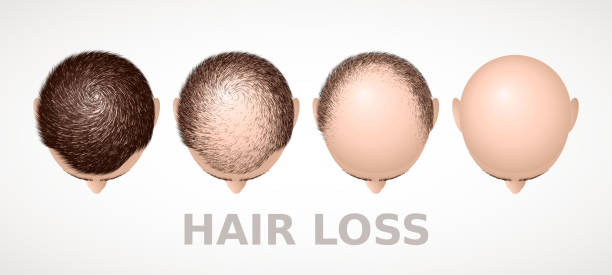
Male pattern baldness or androgenetic alopecia is a condition that follows a predictable pattern and is measured by the Norwood Scale. What are the 7 stages of male pattern baldness? The system created by Dr. James Norwood helps to understand and eventually solve the problem. It assesses hair loss from a minimal receding hairline to complete baldness, thus assisting men in recognizing it early and taking necessary steps.
Understanding the Norwood Scale
The Norwood Scale describes seven major stages (and a few subtypes) depending on the degree of hairline retreat and the amount of thinning in the crown. The process is dependent on genetics and DHT (dihydrotestosterone) sensitivity and affects approximately 50% of men by the age of 50. Knowing your stage helps you decide on treatments such as minoxidil or finasteride.
The 7 Stages of Male Pattern Baldness
The transition between Stages 2-4 can usually be seen in the 20s-30s, while the changes quickly get more obvious in 40s. The progress can be accelerated by such factors as hereditary traits, stress, and bad condition of the scalp. In the early stages, one can bring back lost hair with the help of drugs, while in the later stages, one will need to have a hair transplant.
If you are able to find out your Norwood stage, you can then decide on the most effective measures to take. You can preserve your hair and confidence by choosing from medicine, laser therapy, and operations and starting whichever is right for you at an early stage.
The 7 Stages of Male Pattern Baldness
|
Stage
|
Description
|
Key Features
|
Typical Age Onset
|
Treatment Window
|
|
1
|
No recession
|
Full juvenile hairline; no visible loss. Healthy density everywhere.
|
Teens-20s
|
Prevention only.
|
|
2
|
Mild recession
|
Slight temple pullback, "M" shape starts forming. Hairline 1-2 cm higher.
|
Early 20s
|
Excellent – minoxidil works well.
|
|
3
|
Noticeable recession
|
Deeper "M" or "V" at temples; often first "balding" sign. Visible from front.
|
Mid-20s
|
Strong – meds + laser therapy.
|
|
3 Vertex
|
Crown thinning begins
|
Recession plus small bald spot on top (2-4 cm).
|
Late 20s
|
Good – combine finasteride + topical.
|
|
4
|
Advanced recession
|
Temples recede further (3+ cm); larger crown spot, bridge of hair remains.
|
30s
|
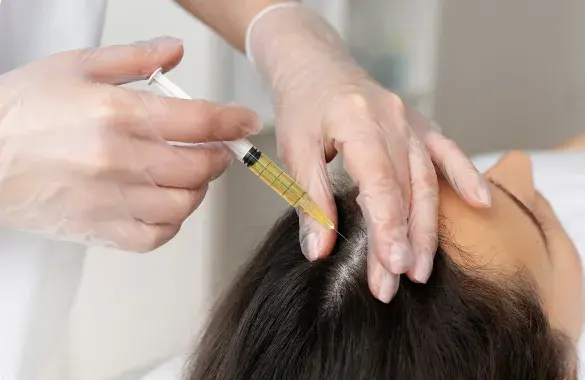
Fair – add PRP or microneedling.
|
|
5
|
Progression merges
|
Temple and crown loss nearly connect; thin band persists. Density drops 50%+.
|
Mid-30s
|
Limited – transplants viable.
|
|
6
|
Severe loss
|
Bridge thins or vanishes; sides hold hair. Top scalp shiny.
|
40s
|
Transplants primary option.
|
|
7
|
Full baldness
|
Horseshoe fringe only; top and front fully gone. Stable pattern.
|
50+
|
Cosmetic (tattoo, wigs, full transplant).
|
Action Steps by Stage
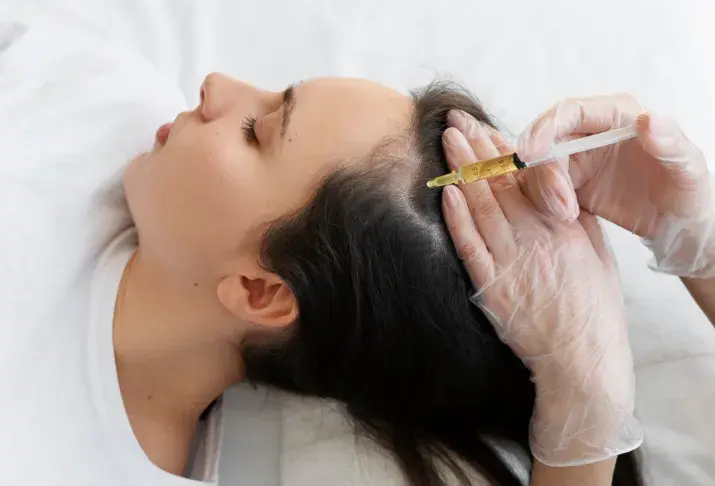
Stages 1-2: Use minoxidil 5% every day, massage your scalp, and follow a diet rich in biotin.
Stage 3-4: Besides minoxidil and laser treatments, start using 1mg finasteride daily.
Stage 5+: Get a doctor’s opinion about taking dutasteride or having PRP therapy.
All stages: Take a photo every 4 weeks; note down changes in the family.
Common Myths Busted
Myth: The more you shave, the more hair you lose.
Fact: Only a cosmetic change.
Myth: Only genes determine hair loss.
Fact: A healthy lifestyle slows down DHT damage.
Myth: It is too late when you reach stage 4.
Fact: You can regain 40-60% of the hair density.
Conclusion
Spotting your Norwood stage early lets you fight back effectively. Whether it is medication, laser, or surgery, the sooner you start, the more hair and confidence you save - do not wait for stage 5.






.png)


-1.png)




-1.png)

-3.png)





.png)







-Aug-02-2026-05-23-10-1368-PM.png)




.webp)
-1.webp)
.webp)
-Jul-07-2026-12-19-56-1023-PM.webp)










-Jun-01-2026-02-54-50-5351-PM.png)
-Jun-01-2026-02-45-39-8016-PM.png)

-May-29-2026-03-30-08-6855-PM.png)



-1.webp)

-3.webp)










.webp)
.webp)

-1.webp)

.webp)
.webp)

.webp)