Get a complimentary consultation today. Get in touch
Simple Human GuideIf you were wondering what really makes a deep tissue massage different from a Swedish one, then you have just found the right spot for your discovery. While these two are very often chosen methods, they greatly differ in terms of the sensation and to know these differences will help you to decide which one suits your body and needs most.
What Is a Swedish Massage?
The reason of a Swedish massage is the relaxation of the client. The masseur works with gentle to medium pressure long, flowing strokes. The muscles on the surface of the body are treated, thus, the muscles get their blood circulation improved and are freed from the light tension by the massage. This treatment is relaxing and if mentally disengaging or just experiencing a state of general relaxation is what you are after, then this is the perfect choice.
What Is a Deep Tissue Massage?
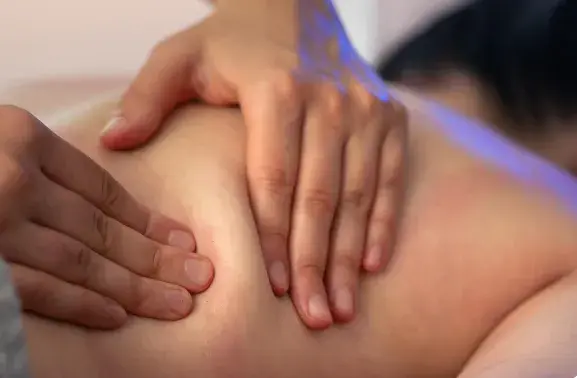
The workings of a deep tissue massage extend beyond the usual depths. It is a strong and slow pressure that is applied, to a very specific and small area, pressing hardest in the tightest spots and unraveling the toughest knots that are buried deep not only in the muscles but also in the connective tissue. Consequently, it is a more targeted choice for muscle-related problems such as chronic pain, injuries, and stiffness. Quite contradictory to the fact that it can be a very intense experience, the subsequent deep tissue release is very comforting and those who are gentle will almost definitely not go far away from it.
Swedish and Deep Tissue Massages Were Compared
- Pressure: A Swedish massage applies gentle to moderate pressure. Conversely, a deep tissue massage puts a firm and focused pressure.
- Purpose: The main purpose of a Swedish massage is that of relaxation and stress relief. Deep tissue is mainly deployed for pain relief and muscle recovery.
- Techniques: One of the major features of a Swedish massage is its long flowing strokes. Deep tissue is a slow, deep, and at times, it is accompanied by the movements of the fingers, thumbs, or elbows while guiding the movements.
- Reason: After undergoing a Swedish massage, one will feel relaxed and refreshed. Deep tissue can cause some soreness but the effect is beneficial for long-term muscle issues.
- Body focus: A Swedish is generally done on the whole body. Whereas, deep tissue only focuses on the targeted areas.
If you are scheduling a massage, please remember these essential points.
- Choosing the right massage for you will be a piece of cake if you just think about what it is that you want, i.e., to relax or to help with muscle pain.
- The most important thing is to always inform your therapist of any injuries, diseases, or pain that you may have.
- In case the pressure is too heavy or too light and you feel it, please let the therapist know. You should always be able to relax in such a situations.
- One can facilitate the removal of waste generated by the massage by drinking water after the massage session.
- Keep in mind that experiencing minor muscle pain after a deep tissue massage is quite normal.
Frequently Questions
Q: What massage should be chosen by a new person?
A: The first experience would be best with a Swedish massage which is more gentle and more suitable. The main aim is relaxation with minimum discomfort.
Q: Can a deep tissue massage be a source of pain?
A: The sensation can be extremely strong and at times a little uncomfortable but the patient should not experience stabbing pain. If you are in pain, you should notify your therapist without delay.
Q: How often should I get a Swedish or a deep tissue massage?
A: The majority of people choose to have a Swedish massage once a month and/or whenever they feel the need of relaxation. Deep tissue is usually done very rarely due to it being more stringent in nature.
Get in touch






.png)


-1.png)



-1.png)

-3.png)





.png)





-Aug-02-2026-05-23-10-1368-PM.png)




.webp)
-1.webp)
.webp)
-Jul-07-2026-12-19-56-1023-PM.webp)







-Jun-01-2026-02-54-50-5351-PM.png)
-Jun-01-2026-02-45-39-8016-PM.png)

-May-29-2026-03-30-08-6855-PM.png)

-1.webp)


-3.webp)







.webp)
.webp)



-1.webp)

.webp)
.webp)

.webp)












-3.png)